


| Mo | Tu | We | Th | Fr | Sa | Su |
|---|---|---|---|---|---|---|
|
|
|
|
1
|
2
|
3
|
4
|
|
5
|
6
|
7
|
8
|
9
|
10
|
11
|
|
12
|
13
|
14
|
15
|
16
|
17
|
18
|
|
19
|
20
|
21
|
22
|
23
|
24
|
25
|
|
26
|
27
|
28
|
29
|
30
|
31
|
|

Writer Kir Lukovkin: “During the pandemic, we learn a lot about ourselves and other people”
31.03.2020
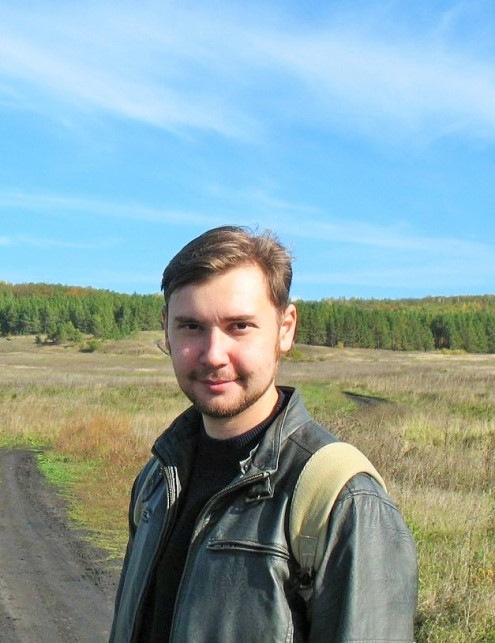
A writer from Ulyanovsk, Kir Lukovkin, is known not only as an author of social fiction, but also as an author of the "dark direction" and thrillers. The Ulyanovsk – UNESCO City of Literature portal spoke with a prose writer about how the pandemic will change the world, what is happening in Russian literature, about ghetto literature, about the hero of the author’s new novel, and about the city.
- People always pay attention to the books of science fiction writers: sometimes their texts come true. How do you perceive the situation with coronavirus in the world? Did she influence you in any way? Reflected in the texts?
- It has not yet been reflected in the texts. The situation is, of course, serious. People should show maximum accuracy and responsibility, which, unfortunately, is not enough for many. Now I observe two conditional "camps" - alarmists and scoffers. The former greatly exaggerate, the latter prefer to ignore the problem as such. I think that the attitude towards this whole pandemic is a good test of humanity. In the near future, we will all learn a lot about ourselves and about other people. People will really open up.
- Many people say that the world will never be the same after the pandemic.
The world will change, that's for sure. You can assume a lot - and be wrong. I would like the world to become a better place, so that this whole situation becomes a useful lesson for humanity, but unfortunately, we know that people have a short memory. To change something in the worldview, you need a really serious reason. And a person is arranged in such a way that theories and warnings do not work on him until he himself is convinced of the truth with his own eyes, and when this happens it will be too late. I generally hold rather gloomy views on our future. No, I do not think that we will die from various causes as described in apocalyptic novels, but life will become much more difficult. First, self-isolation of people will hit the economy and could cause a recession or even a crisis, depending on the duration of the pandemic. And this can lead to social problems. Control over the movement of people and their state of health will be tightened. Perhaps they will introduce a social rating, and we will all be “under the hood”. At the same time, there will be a rapid growth in remote technologies, robotics, virtual reality, unmanned vehicles. Manufacturers will reconsider supply chains, countries will follow the path of self-isolation. But all this is only with a long-term effect. If everything ends well, we will just take better care of our health.
What is your relationship with reality? Does it happen that, for example, you fall out of it?
- Any writer or poet perceives reality in a slightly different way: for him, reality is a source of creativity.
How is the writing process going? Do you enjoy it?
- Creativity should bring only pleasure. If I'm not drawn, I don't write. I am not bound by publishing houses and therefore write freely what I want. I don't have a plan to write a set amount of text. I may not write for a year or two. It does not matter. It is important that what was written before already exists, and what will be written will inevitably appear.
- Did you have any feeling in your childhood that you would become a writer? Did you want to become one or did you not think about it?
- I didn't think at all. I just always liked to read. Then I realized that it turns out to write.
- If there is something in common between your work as a teacher and writing? Who do you feel more like - a teacher or a writer?
It's hard to say, I haven't figured it out myself. But the combination turned out to be useful. I always try to learn new things, learn something and share my knowledge and experience, and this is best done if you know how to tell in an interesting way.
- How do you feel in Ulyanovsk as a writer? Do you need an environment or does it not matter? In general, what kind of relationship do you have with the city?
- I feel good. The medium doesn't matter. The attitude towards the city is twofold - I like that it is green and not overpopulated, and I don’t like the general backwardness in development.
- What trends can you note in modern Russian literature? Which ones make you happy and which ones make you nervous? Are there any new intonations and themes?
- Russian literature is on the path of simplification. Texts are becoming shorter and simpler against the backdrop of a huge number of people writing. It is difficult to catch something of high quality in this mass.
We have a long-standing division between genre literature, which is considered a kind of ghetto, and the so-called "big" literature, which is considered elitist. Now the boundaries between them are gradually blurring, and this pleases me. I don't like hard boundaries at all.
I also like that there are no barriers between the author and the reader. Now any author can publish on the Internet and win readers there. For these purposes, a lot of advanced platforms have appeared. Paper publication becomes a pleasant, but no longer mandatory bonus.
On the positive side, we can also note that some genres are on the rise. For example, in the past, horror was somehow not very popular, and now there is a whole wave of young authors writing in this direction, and quite well.
But what worries me is the general decline in the literacy of authors. I can understand if a person makes typos, but if there are five of them on each page of the text, the problem is in the level of writing. And some other genre themes are also bewildering. For example, now for some reason it is fashionable to write about the "popadantsev" and "Lit-RPG". I never understood why everyone was reading this. As if there are no other themes or plot moves.
- Could you name three features that are characteristic of modern science fiction?
- Commerce, trash, waste
- You said you are working on a new novel right now. Is it possible to reveal some details? Who is its main character? In general, what is it today to write a novel?
- This is the seventh novel I have written and the second part of the dilogy. Before that, I already had the experience of writing a trilogy, two of the three books were even translated into English and published by Magic Dome Books (sold on Amazon Kindle), so the work is on track. A novel in the genre of planetary fantasy, the setting is a large planet of quicksand. This is a story of revenge. Having lost his memory, the hero tries to remember the past, collects himself piece by piece, like a mosaic. Unlike the previous young adult trilogy, this story is quite violent. That is, there is not only friendship, but also death, and betrayal, and intrigue. I have not yet decided whether to publish immediately or send it to a novel seminar.
Technically, a novel is easier to write than a short story. There should be nothing superfluous in the story, and it should be a complete story with a small volume. This is not easy to do. But the novel gives a wide field for action. But here the main thing is to observe the measure.
reference
Kirill Lukovkin was born in 1985 in the city of Baku (Azerbaijan). Then in 1990, together with his family, he moved to the Russian Federation, to the city of Ulyanovsk, where he still lives. In 2007 he graduated from the Ulyanovsk State Pedagogical University named after I.N. Ulyanov with a degree in jurisprudence. Works as a teacher. The sphere of creative interests is science fiction and its subgenres, literature of the "dark direction" and thriller. Published in Reality Fiction, Milky Way, Edita magazines and the DARKER webzine. The author's debut novel "The Citadel", written at the intersection of dystopia and post-apocalypse, was published by E publishing house in 2016. The protagonist escapes from his native Commune in order to find out the truth about the world around him - the space of a high-tech Thermopolis.