


| Mo | Tu | We | Th | Fr | Sa | Su |
|---|---|---|---|---|---|---|
|
|
|
|
1
|
2
|
3
|
4
|
|
5
|
6
|
7
|
8
|
9
|
10
|
11
|
|
12
|
13
|
14
|
15
|
16
|
17
|
18
|
|
19
|
20
|
21
|
22
|
23
|
24
|
25
|
|
26
|
27
|
28
|
29
|
30
|
31
|
|

Poet Danila Nozdryakov: “I am not a hermetic author”
06.08.2019
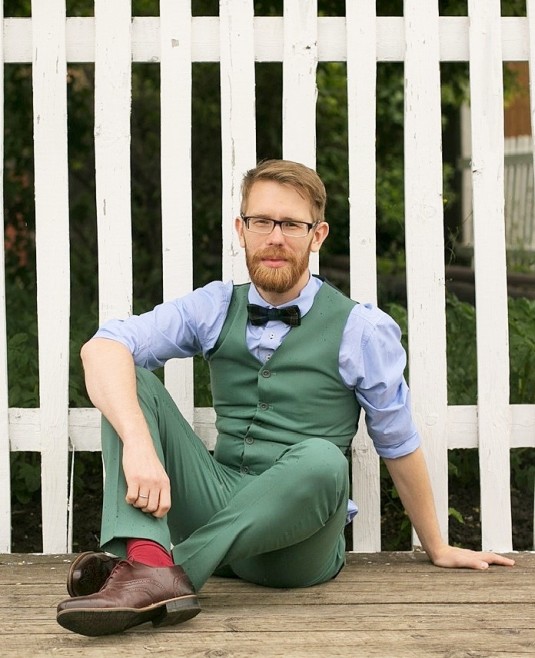
Danila Nozdryakov is a poet, prose writer, journalist and philosopher, he lives and works in Ulyanovsk. His texts are reminiscent of news videos with the caption "No comment". In an interview with Galya Uzryutova for the portal "Ulyanovsk - UNESCO City of Literature", Danila spoke about why the "poetry" of Russia cannot be called in one word "poetry", about the tightness of the authors, about the relationship with Ulyanovsk and their pseudonyms, about the relationship between journalism and poetry, and also about why writing is like Sisyphean work.
- As a poet, what is your relationship with the city? What is going on between you? Does the place you live influence what you write?
- A real relationship with your hometown can only appear at a distance. It's like with parents. Living with them, you perceive them as a kind of given, as objective conditions of existence. You can rebel, you can completely accept their rules, you can isolate yourself and try to create your own world, build an ivory tower in your room, but answer the question of how genuine love for them is, without leaving the symbiosis, without living separately from them, the so-called independent life is impossible. Maybe that's why the most ardent patriots come from emigrants. There are, of course, reverse cases.
I was born in Ulyanovsk and never lived anywhere for more than a few months, except for Ulyanovsk. I have a symbiotic relationship with the city, the umbilical cord connecting me with the city has not been cut. In order to somehow understand the authenticity of feelings for the city, I periodically dive into its history - more often in the Soviet, less often pre-revolutionary. I have a short text about how behind the brick facades of the nine-story buildings on Minaev Street, in fact, the former log cabins and front gardens with fragrant lilacs are hidden. This reference to the past gives room for comparison and study of the genealogy of the city.
- You said that you like to turn to the Soviet history of the city more often. Why to her?
- Not to the entire Soviet history, but to a certain period of time. By the time of the break of epochs. And it did not fall on the revolutionary years, when the changes were for the majority, rather, external and coercive in nature, as in the whole country. The real material transformation took place in the sixties and seventies, when an attempt was made to create a completely new city.
Yes, in the thirties many beautiful cathedrals were destroyed, moreover, it is worth noting that the local authorities went too far in this matter. The same Trinity Cathedral was recognized by Moscow as an object of cultural heritage to be protected, but the city leaders itched their hands to remove it so much that no orders from the capital could stop them.
In general, the face of the city has not changed much. You can open the memoirs of Nina Krivosheina, based on which the film "East-West" was staged in 1999, and see what a backwater it was in the first post-war years. But on the half-century border in Ulyanovsk, a revolution begins to take place. The starting point is the construction of the Kuibyshev reservoir, and then preparations for the Lenin Jubilee. And this turning point seems to me the most interesting and defining.
- For the atmosphere of the city, it also turned out to be decisive. I always talk about Ulyanovsk as a place with a special aura, meaning that the city lives in two extremes, and this exhausts, tears people apart: here two rivers flow in different directions, and the city center rises between the old and new bridges (imperial and presidential). You also say that there is some special metaphysics in Ulyanovsk. How does all this affect local residents? Some people say that Ulyanovsk residents are rather apathetic.
- About the special metaphysics of Ulyanovsk, rather, more a thing made for a red word. But in any joke, you know there is a share of what is there. To the conversation about extremes, I would add Nabokov's famous statement about the two Ilyichs who ruined Russia - Lenin and Oblomov. The death of Russia is a separate conversation, I believe that these constant moans differ little from the portents of the end of the world, but both Ilyichs are our natives. And if we go into metaphysics, then Lenin Street also paradoxically crosses Goncharov Street. It is very similar to two opposite ways of being, existing in the same time and place, and sometimes in confrontation.
The apathy and laziness of the Simbirians were written about in the 19th century. Goncharov, for example. Or a travel blogger from the era of imperial stagnation, economist Yevgeny Ragozin. Having visited Simbirsk in 1888, he noticed that there was such dead silence and calmness in the city that it can be recommended as a resort for the nervously ill. In the fifties of the next century, the artist Ivan Lezhnin, who came to Ulyanovsk, frankly called the city a hole. Now, walking in the evenings with non-resident acquaintances in the center, I also periodically read the Diogenes question in their eyes: “Where are the people?”. In many cities at night life is just beginning.
At the same time, we have many active people, just as there are many now, and there used to be. One Lenin is worth something. Or his father, Ilya Nikolaevich, and Ivan Yakovlev. By the way, the project of recreating the city for its anniversary was original in that it tried to combine both of these trends - glass-concrete ultra-modernity and dynamism with wooden provincial archaism. Perhaps this is the way of existence of our city.

- Do you need a literary environment in your city? What is missing in Ulyanovsk in this regard?
- Together with Dima Sopyryaev, a wonderful poet and musician, several years ago we started and continue to this day the Post Text project in library No. landscape of Ulyanovsk. The essence of the project is that we invite writers, poets, philosophers from other cities to give lectures and exchange experiences. To this is added a philosophical circle and a cinema club, which are the components of the project. So we try to create a literary environment around ourselves.
At first, I was upset that half the city did not come to our events, because they are so interesting. He cursed and commemorated Ulyanovsk apathy and indifference with an unkind word. But now I have a simpler attitude to this - well, people are difficult to lift, what can we do about it. The main thing is to have a backbone of those who really need and are interested in it. I'm not sure that the creation of new projects can somehow radically change the literary environment in the city. Quantity doesn't always just translate into quality.
We have a program "Ulyanovsk - the UNESCO City of Literature", according to which our own events are held. There is Pavel Soldatov with several interesting projects. There are many other people - you won’t remember all of them right away, alas.
There are also quite objective reasons why humanitarian knowledge does not take root well in our country. For example, we did not have a classical university with a strong philological faculty, and the modern literary environment often arises precisely around such a point of strength.
- There is quite a lot of social in your poems, in texts you often respond to some world political events. Is it the influence of your work as a journalist?
- There is a well-known expression of Hegel, which is not applied to anything. It says that philosophy is an epoch grasped in thought. That is, philosophy, which, at first glance, speaks of universals and things of a timeless nature, always bears the imprint of the time of its creation. Then this phrase was used in relation to other types of art - Godard, for example, said that cinema in this is related to philosophy. But can't the same be said about literature? I am of the opinion that even the most apolitical position, which, for example, Fet had, is a political position. And if I'm not hiding from a direct statement, I'm just trying to be honest with myself in this regard.
And journalistic experience provides a lot of material for reflection. Colleagues often tell me about some situation: “You should write a poem about it.” Sometimes I give in to this requirement, but more often I forget.
- In Russia, they often talk about the differences between different poetic schools, for example, about the originality of the Ural poetic school. In your opinion, is there Volga poetry? If so, how is it different from the rest? Does the landscape affect this in any way?
- The Ural poetic school is associated with such a person as Vitaly Kalpidi, who for a long time has been and continues to anthologize Ural poetry. In many ways, this SOUP (modern Ural poetry) is boiled on a territorial basis. An ideological association is closer to me, when people are grouped who share similar views on the technique and methods of writing, on the tasks of poetry, on the position of the author in the world. Perhaps, if a person like Kalpidi appears in the Volga region and takes on such a job, they will start talking about the Volga poetry. As for the most powerful poetic centers of the Volga region, modern poetry has so far chosen for itself only Nizhny Novgorod, Saratov and Samara. In other cities, while things are worse with her.
- What is happening with poetry in Russia now?
- It is quite difficult to judge all Russian poetry. Besides, a single poetry, in my opinion, as such, does not exist. We can talk about poetry in the plural.
If we go to the Internet, especially social networks, then there are just a lot of poetry groups. Sometimes there is a feeling that the number of writers is many times greater than the number of readers. Based on this, one might get the impression that the country is experiencing a poetic boom, comparable to the evenings at the Polytechnic Museum, readings at the Mayakovsky monument and stadiums in the sixties. But this is only an impression, because to judge by the level of poetry by network authors, just as by the detectives Marinina, Koretsky, Dontsova - about all literature in general. Although some like it, even very decent people.
On the other hand, thick magazines continue to exist, where you can get printed only after passing through a critical sieve. But the number of their readers is declining, millions of perestroika circulations are a thing of the distant past. Freedom, which many of their authors and creators desired, played a cruel joke on them, opening the way for graphomania.
Actual modern poetry can be found both on the net and on the pages of thick magazines. It exists in this interworld, not adjoining definitively to any of these sides. Unfortunately, not many people know about its existence, and almost exclusively in the literary community. Here is such a puff cake of poetry in Russia.
- Is it important for you to voice your texts?
- It is not important for me to read aloud in itself, but as an opportunity that it gives. The ability to convey your text and your thoughts to as many people as possible. I realize that all classifications are incomplete, but writers seem to fall into two broad categories: those who want to be understood and those who strive for hermeticity and impenetrability. I've tried both writing strategies, but I'm more comfortable with the first one now. Perhaps here, just the journalistic work played its role - after all, it is desirable to chew everything in the articles so that even the most unprepared reader understands all the hints and equivocations. And reading aloud only allows you to convey once again what, perhaps, was not understood when reading to yourself.
In general, there is a huge gap between the author's reading and the reader's perception. In my school years, of course, I really liked Mayakovsky. And he imagined that he was reading his ladders, like at a rally, or at a rap battle. I was surprised and very puzzled when I heard him read in the tape and realized that "black pants made of velvet voice" was not just a metaphor. I will liberally add that both the author's and the reader's reading have the right to exist.
- There are writers who are afraid of textual silence and panic if they do not get a letter for a long time. Others, having stopped writing, feel some kind of liberation. Do you have a fear of stopping writing, or would you take dumbness calmly?
- I have, rather, the opposite. I panic that I get lines, and these lines add up to texts. I say "texts" because I can't get rid of the feeling that poetry or prose is too pretentious. Lyrics – sounds more neutral.
Of course, there are all these Lacanian paradoxical ideas about love as a kind of cannibalism, about writing as a form of killing reality. After all, the writer does not actually experience life situations, but imagines how and in what words they can then be described. By transferring the event to paper or electronic form, he actually cracks down on what happened in reality, because from now on it will exist exactly in the form he described. In any life situation, I imagine how it will be useful to me for writing. It is difficult to experience true enjoyment of the moment with such an attitude. Therefore, liberation from writing would probably be akin to the state of Sisyphus, finally getting rid of his stone.
- Age is a thing that affects you as an author, or not?
- I can say that at seventeen I was more interesting and smarter than myself now. In a way, it's even a lot quieter. And I was able to read much more than now. And at fourteen wiser than at seventeen or eighteen, not to mention modernity. I was not a difficult teenager, so I had to endure childhood illnesses at a more mature age. One thing I regret is that my teenage wisdom did not allow me to speak in my own voice, forcing me to hide behind the opinions and words of others. Probably, if not for her, I would have written the best and brightest texts at this age. And I probably wouldn't write more.
- As far as I know, you also write prose? What is the relationship between your two ways of writing?
- Last year, Evgeny Strelkov from Nizhny Novgorod came to visit us at Post Text. Almost a renaissance personality, engaged in many areas of contemporary art. He has an interesting attitude to poetry - he considers his poems to be waste products. That is, at first he writes prose or popular science texts, while working on them, many branches arise, and these branches become poetry. I don’t see anything shocking or derogatory in such treatment of poetry, Akhmatova also wrote: “If only you knew from what rubbish poetry grows.”
For me, my poetic texts are something that could not be squeezed into prose. Poems. They remained so on their own, and nothing more can be done with them. Let them live like this.
- Have you ever used a pseudonym?
- At one time I used a large number of pseudonyms, many of which I don’t even remember now. At that time, I was fond of the Portuguese poet Fernando Pessoa, he, as you know, used heteronyms - pseudonyms for part of the works, united according to a certain attribute. Each heteronym was for him a separate personality with a unique style of writing. I, too, was fascinated by this idea - to write under different pseudonyms in different ways. But then he still abandoned it, and some of my pseudonyms became separate literary characters. For example, Nikita Larin, who often meets with me.
- Recently, together with other authors of the Volga region, you participated in the work of the All-Russian School of Writing in Saratov. What do the authors of the Volga region write about today? Whose texts were of particular interest to you?
- I'll start with the fact that regionally the Volga region differs from the actual Volga region - the Orenburg region, and Bashkiria, and the Perm Territory, and the Kirov region, which are essentially outside the Volga region, fell into the Volga Federal District. The Urals from Ufa and the Perm Territory represented their original school, in contrast to the rest of the seminar participants. As for the rest of the participants, both experimental and more traditional poetry was presented. Among the first I would mention Vladimir Popovich, among the second - Lyubov Glotova, both from Samara and both will become participants in the Forum of Young Writers, which will be held in September in Ulyanovsk.
For reference
Danila Nozdryakov was born in 1986 in Ulyanovsk. Graduated from Ulyanovsk State University. He worked as a teacher of philosophy and history, now a journalist. Poems were published on the Polutona website, in the magazines Translit, Simbirsk, Literature, Textura.club in the collection Music of Words: 100 New Names, etc. Participant of literary festivals in Cheboksary (Voice -A"), Togliatti, Saratov ("Center of Spring"). He was on the long list of the literary award "Lyceum" named after A. S. Pushkin (2018). Winner of the V International Literary Competition "Verlibre" (2018) in the nominations "Poetry" and "Prose". Author of the collections of short stories "Two-humped deer" (2016) and "People with a reduced social opening" (2019).
Photos by Alexey Kuzmin, Elmira Zamaletdinova, Andrey Polyansky.
Counter of views: 26