


| Mo | Tu | We | Th | Fr | Sa | Su |
|---|---|---|---|---|---|---|
|
|
|
|
1
|
2
|
3
|
4
|
|
5
|
6
|
7
|
8
|
9
|
10
|
11
|
|
12
|
13
|
14
|
15
|
16
|
17
|
18
|
|
19
|
20
|
21
|
22
|
23
|
24
|
25
|
|
26
|
27
|
28
|
29
|
30
|
31
|
|

Olga Sheipak about the new novel "Tarbagatai": "Face the past - you won't go wrong"
20.05.2020
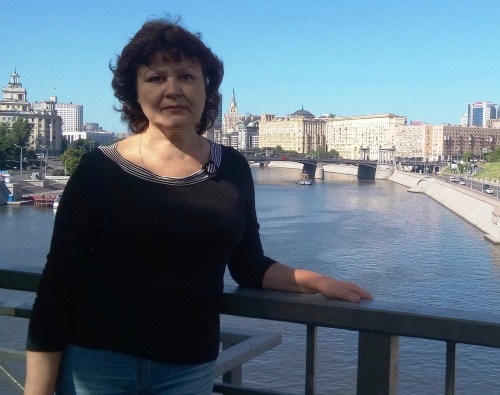
Recently, the Aldoor Publishing House published a new novel by Olga Sheipak, Tarbagatai. The writer told the portal "Ulyanovsk - UNESCO City of Literature" about how the book was created, about the study of the Old Believers and the life of the family, and also about what discoveries she made while working on the text.
– Olga Georgievna, how long did this novel take to write? As far as I know, the book is related to your family?
– My ancestors are Old Believers, in Transbaikalia they are called family. Until the end of the 20th century, they did not change the spiritual and material traditions that they carried from the 17th century into the modern world. As a child, I was ashamed of my last name. As soon as she was called (maiden), she heard derisively: “Semeyskaya, from Tarbagatai” - people condemned the Old Believers for their closeness and conservatism. Not only my grandmother, but also my father's sisters wore old family dresses with a kichka on their heads. Alcohol, tobacco and even tea were banned. Gentiles were not allowed into the hut, where there is a kiot with holy faces.
In 2003, after a trip to Lake Baikal and Tarbagatai, I finally realized that I had to sit down to read a book, although the ardent desire to immerse myself in the subject of the Old Believers arose long ago, after the departure of my grandfather. I spent my last summer holidays with him on Lake Pike in Transbaikalia. He, strong, in my understanding - eternal, like a century-old cedar, suddenly showed the "mortal" in the chest: clothes for burial. I laughed. But three months later we received the news that grandfather was gone. My aunt Vassa sat all night near the dying man, and in the morning he suddenly pulled himself away from the pillow and shouted: “I see Him! Vassa, remove the cross from the icon case - bless! She rushed to the icons, took off the ancient cast cross and overshadowed her father - he expired.
This story of my aunt shocked me. I, a member of the Komsomol, suddenly realized: The one whom Illarion saw is there. Interest in family faith increased as I grew older. And when I plunged into the origins of the family ... This is a Klondike of history! But how to embrace the immensity, to embrace three centuries of Russian history? The blessing of our Vladyka, the late Metropolitan of Simbirsk and Novospassky Proclus, helped.

Through the rocks
Why did you call the book "Tarbagatai"? The geography of the narrative is much wider: Yaroslavl, Suzdal, Moscow, the Commonwealth and, finally, Transbaikalia.
– This title works for the most important task of the novel. Tarbagatai for me is not just a geographical point - it is a symbol of firmness of spirit and faith, a guarantee of the right historical path. The heroes of the book are family Old Believers who, during the reign of Catherine II, were expelled from the Gomel Vetka (the territory of the Commonwealth) to Transbaikalia. The search for the origins of the genealogy led me to the 17th century, to the church schism, to the flight of my ancestors from Moscow after the execution of Archpriest Avvakum, and then I.A. Khovansky. I had to immerse myself in history, to study the century-long history of the Chebunins' stay on the territory of the Commonwealth, the tragedy of their defeat by Catherine II and resettlement to distant Siberia, to virgin stony lands.
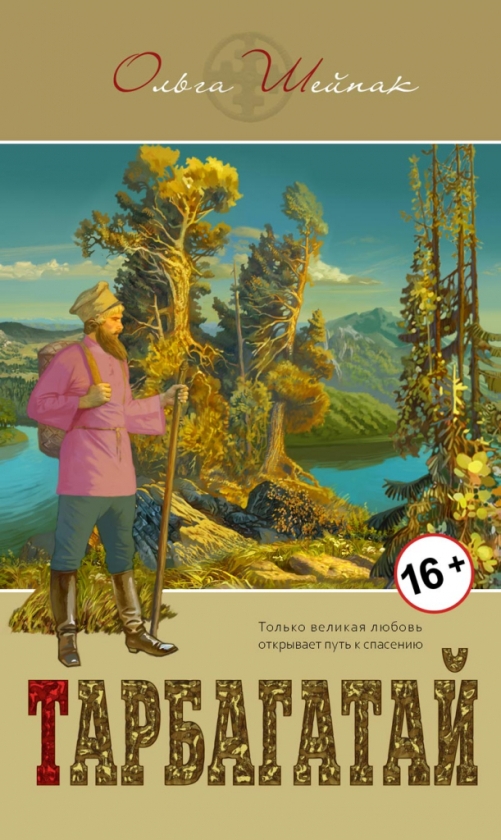
- Who worked on the cover? How was it created?
– The book “Tarbagatai”, like the novel “Fyodor Ablomov”, was illustrated by Vyacheslav Lyulko. We have been friends for a long time and strongly. 40 years ago, he was my student, he loves literature very much and from childhood he dreamed of becoming an illustrator. His dream came true. Vyacheslav graduated from the Moscow Pedagogical University, graphics department and has been designing books all his life. Hundreds of popular publications passed through his hands. He is a passionate and demanding book reader. Before concluding an agreement with a publisher, he reads the manuscript. If you don't like the book, you refuse to illustrate. Everything that I write, I send to Slava for judgment - he is my main critic and meticulous reader. If he discovered an interesting author, he immediately recommends it to me - every day we exchange letters.
– You have been living in Ulyanovsk for a long time. Do you miss your small home?
– Transbaikalia is always in my heart. The nature of Siberia is special - spiritualized. Both grandfather and father spoke of the Selenga as a wayward woman, about Baikal as a stern old man. As soon as the ice began to drift on the Selenga, we went fishing, and the father dipped us, daughters, in turn into the water, driving away the floating ice floes. By nature, I am Selenga. Hotness, obstinacy, energy, speed of flow - all from her.
I loved to visit my grandfather's winter hut behind Ubukunkka - my father and I bumped there every autumn. In October, he took a vacation and went to the taiga to solicit. He taught us, daughters, to shoot accurately, to navigate in the taiga. When my first book came out, my father said disappointedly: “Well, what are you writing about? Write about the taiga, write about Siberia - the whole truth is there.
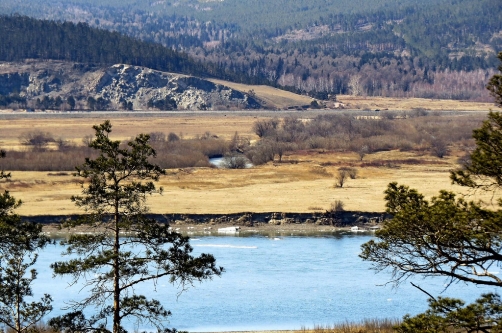
Over the Selenga
- Did any discoveries happen while you were working on the book?
– First, I wanted to show that Old Orthodoxy in the 20th century reached a dead end. The impossibility of communion weakened the spiritual fire of the family, they had a feeling of superiority over the Gentiles, it alienated them from the living Christ. The protagonist of the novel, Illarion, is one of the few who does not shy away from communicating with the Buryats and Siberians, his conflict with Daria and other family members is a conflict of faith and Christian love.
But if I didn’t admire the family in my soul, there would be no romance. They have something to respect. The Decembrists, F.M. Dostoevsky, V.G. Rasputin. All researchers noted their diligence, high culture of agriculture, decency and honesty. Semeysky close partnership, they lived in a community since the XVII century, had a common treasury. “Helping” the villagers who lacked male hands persisted until the end of the 20th century.
For 300 years they guarded the ancient apostolic Word. What drove them? Stubbornness? Not at all. Deeply immersed in the topic of schism and old belief, I came to an unexpected conclusion. Now that the language has been desecrated, it is worth seriously thinking: maybe it’s true - antiquity is sacred? The word is sacred.
One of the heroes of the novel, Elder Joasaph, instructs Yegory, who has to go through a difficult path of exile: “The living word must be guarded. As it was originally written down by the apostles, so it must pass from generation to generation. The word has immeasurable power. And it brings the sky closer so that the ultimate truth is visible at a glance.”
Here's what I discovered for myself.
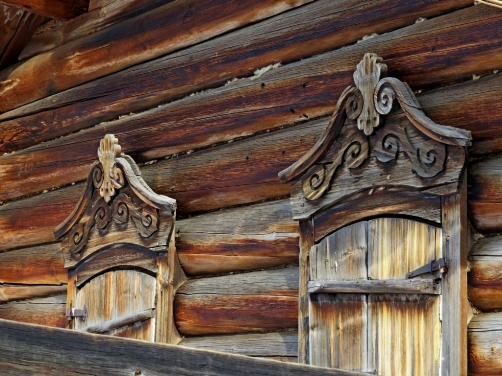
Warm walls and windows with shutters
- It is interesting that the spiritual culture of the Tarbagatai family is under the protection of UNESCO.
“I found out about it not so long ago and I was glad. People became interested in the culture of the Semey people, they reached out to Tarbagatai: to the local museum, to the Old Believer church. Interest in Znamenny singing has grown. Some, however, go out of curiosity. And yet, the understanding came that it is necessary to hold on to the threads of the family, to preserve history.
We need to relearn how to look not forward, but backward. After all, we still live like Turgenev's Bazarov: we destroy and move on. On the ruins - into the future? Silly. We and the youth have taught to live in Bazarov's way: crash and run forward. No, stand facing the past - you can't go wrong. The future will find you. From this point of view, interest in ancient Orthodoxy is justified.
You can buy the book here
Photo - from the personal archive of Olga Sheipak
Reference
Olga Georgievna Sheipak is a prose writer, author of fiction and journalistic books. Member of the Writers' Union of Russia. Laureate of the All-Russian Literary Prize named after I.A. Goncharov, All-Russian Orthodox Literary Prize. St. Alexander Nevsky.
From an interview with the writer: “My father is from Transbaikalia, my mother is from Mogilev, so my capillary system is from the Baikal depths, where I was born, and my nervous system is from Belarusian melancholy and tenderness.”
Olga Sheipak has been living in Ulyanovsk for many years. She worked as a TV journalist, hosted an author's television program about cultural events in the region. Since 1995, she worked as an editor, and from 2001 to 2015, she was the editor-in-chief of the Monomakh local history magazine. Honored journalist of the Ulyanovsk region. Recently, the Aldoor Publishing House published a new novel by the writer - Tarbagatai.
Prepared by Gala Uzryutova